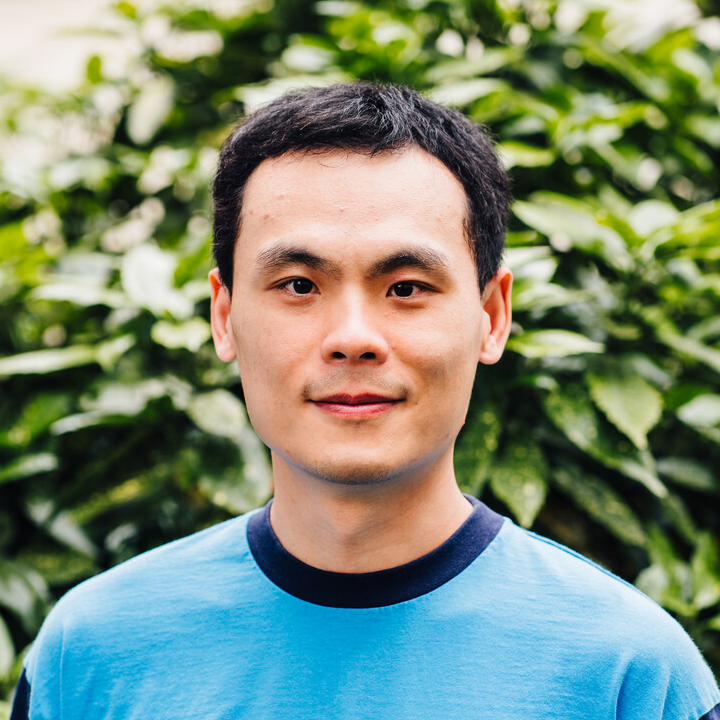
I am a Full Professor at the Department of Computer Science, the University of Warwick, and the Head of the AI/ML Systems (AMS) Division. I am a Fellow of the Alan Turing Institute, the UK’s national institute for data science and AI.
Previously, I was a Senior Research Scientist at Samsung AI Research Centre until 2024, where I led research on Automated Machine Learning (Automated ML) for On-device Intelligence. I obtained my D.Phil. from University of Oxford in 2014.
We have multiple openings for PhD/internship positions. Scholarships available from various sources at Warwick. Please make contact for further information.
2026/02: Two papers (on multi-condition fusion in diffusion and gloss-free sign language translation) accepted to CVPR.
2026/01: Three papers (on diffusion-based trajectory recovery, adaptive traffic signal control, and unified data platform with LLMs) accepted to WWW.
2025/09: Three papers (on efficient distiallation for diffusion models, gloss-free sign languange translation, and individualized, voxel-level brain parcellations from fMRI) accepted to NeurIPS.
2025/05: Two papers(one on diffusion-based road network generation, one on dynamic graph modelling) accepted to IJCAI.
2025/05: FlexControl (computation-aware controlled T2I generation with differentiable router) accepted to ICML.
2025/04: New work on improving efficiency of diffusion models via attention reuse accepted to IJCV.
2025/01: New paper on differentiable pruning at initialisation acceepted to ICLR.
2024/12: EX-Gaze to appear in IEEE TVCG.
2024/11: AdaFlow received Best Paper Runner-up Award at SenSys 2024.
2024/10: New work on event-based eye tracking to appear in IEEE T-PAMI.
2024/10: New paper on on-face gesture recognition via on-ear vibration sensing accepted to IEEE TMC.
2024/09: New paper on opportunistic inference accepted to SenSys 2024.
2024/07: New paper on trajectory recovery accepted to CIKM 2024.
2024/05: New paper on hierarchical generative NAS accepted to ICML 2024.
2024/02: New paper on graph-based sign language processing accepted to CVPR 2024.
2023/10: New work on rotational speed estimation with event camera to appear in IEEE TMC.
2023/09: New EV-Eye dataset available on GitHub.
2023/09: Two papers accepted to NeurIPS 2023.
2023/09: T-CET received Best Paper Award at AutoML Conf 2023.
2023/07: New work on generating neural architectures accepted to AutoML Conf.
2023/05: New work on training-free NAS (T-CET) accepted to AutoML Conf.
2022/11: New paper on efficient NAS accepted to AAAI 2023.
2022/09: Our paper on macro NAS benchmarks (BLOX) accepted to NeurIPS 2022.
2022/08: Our teams won both the 1st and 2nd places at the Zero Cost NAS Competition held in conjunction with the AutoML’22 conference.